Windborne

Fostering Nature Connection and Playfulness through Multimodal Interaction in Healthcare Settings

Introduction

Hospital inpatients and visitors often experience a profound sense of stress and disconnection. Confined to waiting areas and wards, they lose the restorative effects of a gentle breeze, sunlight, and living plants, while medical routines leave them in passive roles of waiting or receiving treatment.

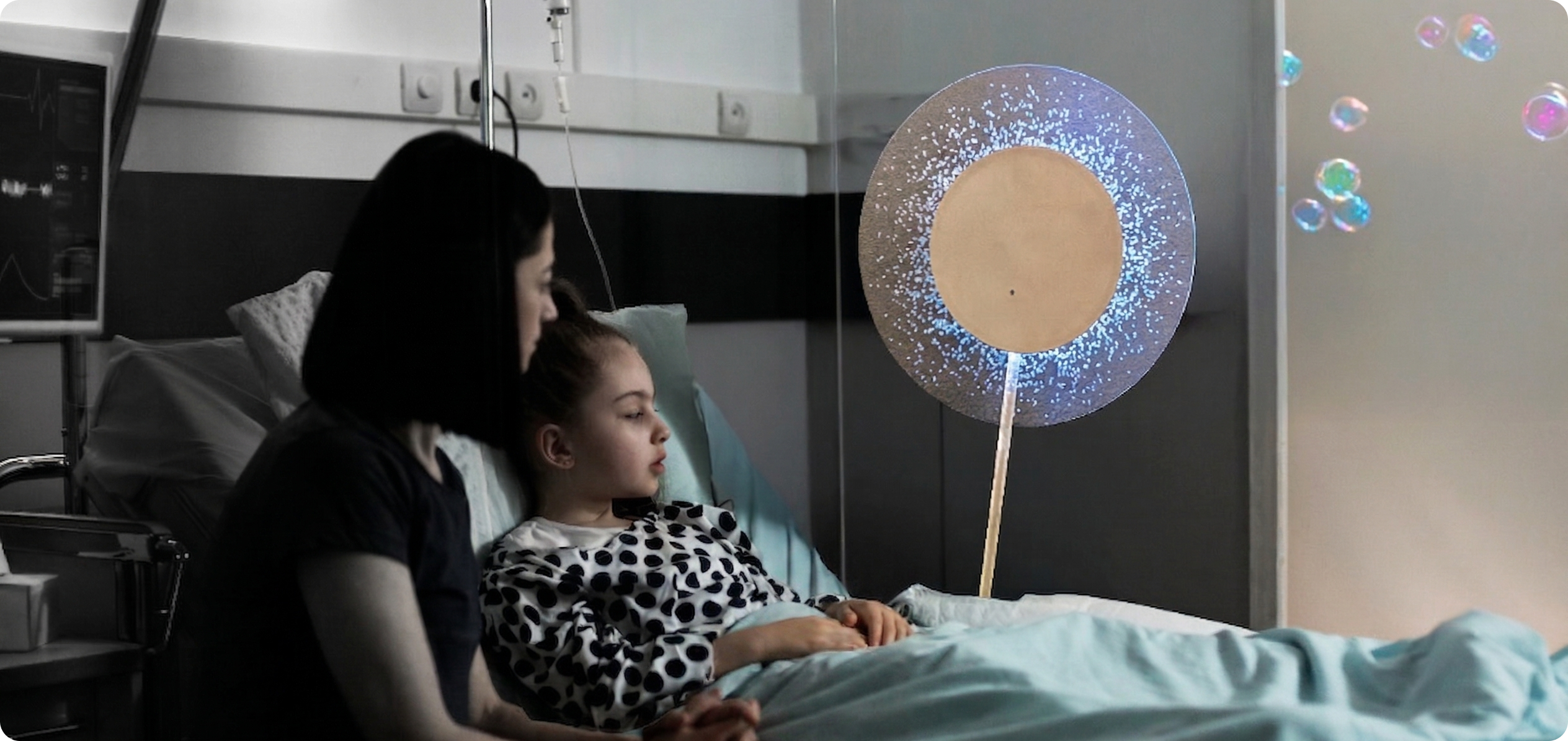
Windborne is a free-standing, gesture-based installation that translates the invisible wind into interactive experiences of light and bubbles. Inspired by the dispersal of dandelion seeds, it responds to a wave of the hand, or simply to someone walking by, with drifting bubbles and shimmering light.

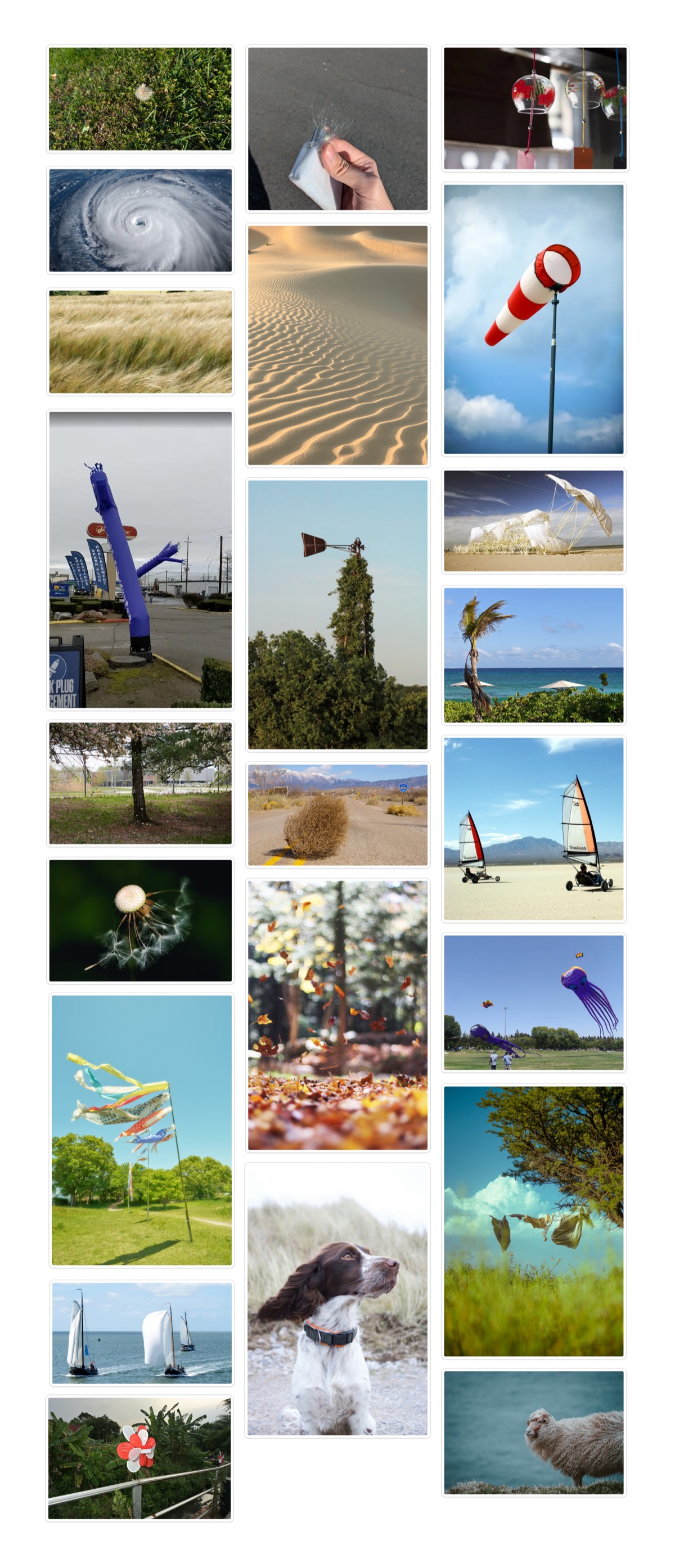
Wind can only be seen through what it moves. Our mood board gathers these traces, from windsocks and kites to rippled sand and falling leaves. The dandelion became our central metaphor: its seed head shaped the light panel, and its scattering seeds shaped how bubbles drift away from your hand.
Keywords: Multimodal Interaction, Caring Design, Playfulness, Bubbles
Mood board of wind phenomena, from dandelions and windsocks to kites and sand dunes

Overview

Context

Demo published in ICMI '26

Team

Borui Wang & Prof. Keith Evan Green, Architectural Robotics Lab

Project Type

Academic Research

Platform / Tech

Arduino, Gesture & Ultrasonic Sensing, Addressable LEDs, Laser Cutting, 3D Printing

Caring Design

From “Fixing” to “Caring”

We ground Windborne in a caring design perspective, which shifts the design paradigm in healthcare settings from “fixing” the human body to “caring” for patients’ subjective and relational experiences. Drawing on Joan Tronto’s feminist ethics of care, we see the installation not as an intervention to cure medical conditions, but as a poetic medium that attends to fragile relationships and emotional well-being.

Composite concept of Windborne in action beside a hospital bed

System Implementation

Four Modules, One Dandelion

Windborne is a free-standing, human-scale installation: an edge-lit acrylic “seed head” on a hollow PVC stem, divided into four modules.

Multimodal Interaction

Three Ways to Play with the Wind

To accommodate varying energy levels, physical abilities (e.g., children in wheelchairs or with attached IV lines), and comfort levels, Windborne offers three interaction scenarios with minimal physical requirements:

Preliminary Feedback

Online Survey & In-person Sessions

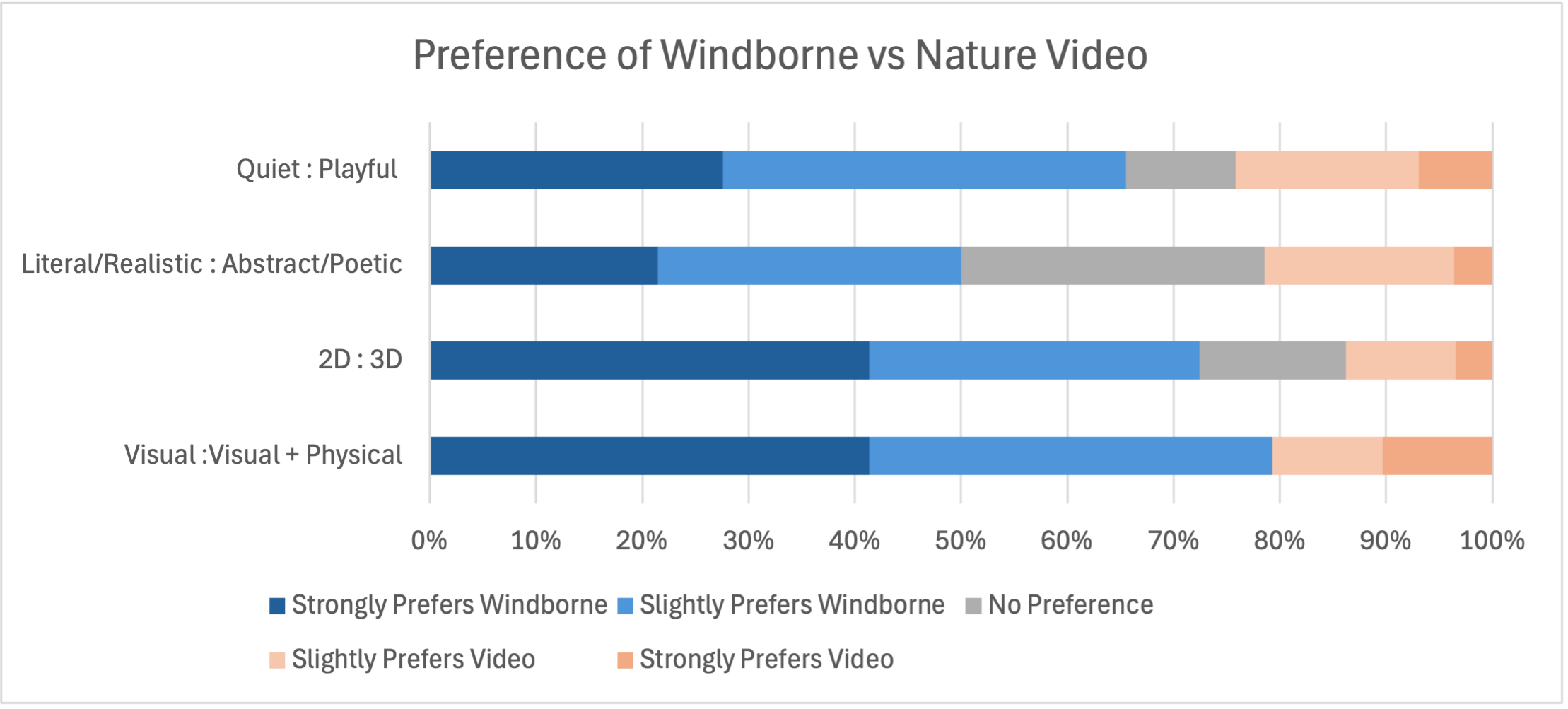
We gathered feedback in two stages: an online survey (n = 30) after participants watched a video of the installation, and three in-person feedback sessions.

Preference of Windborne vs. nature video across four dimensions

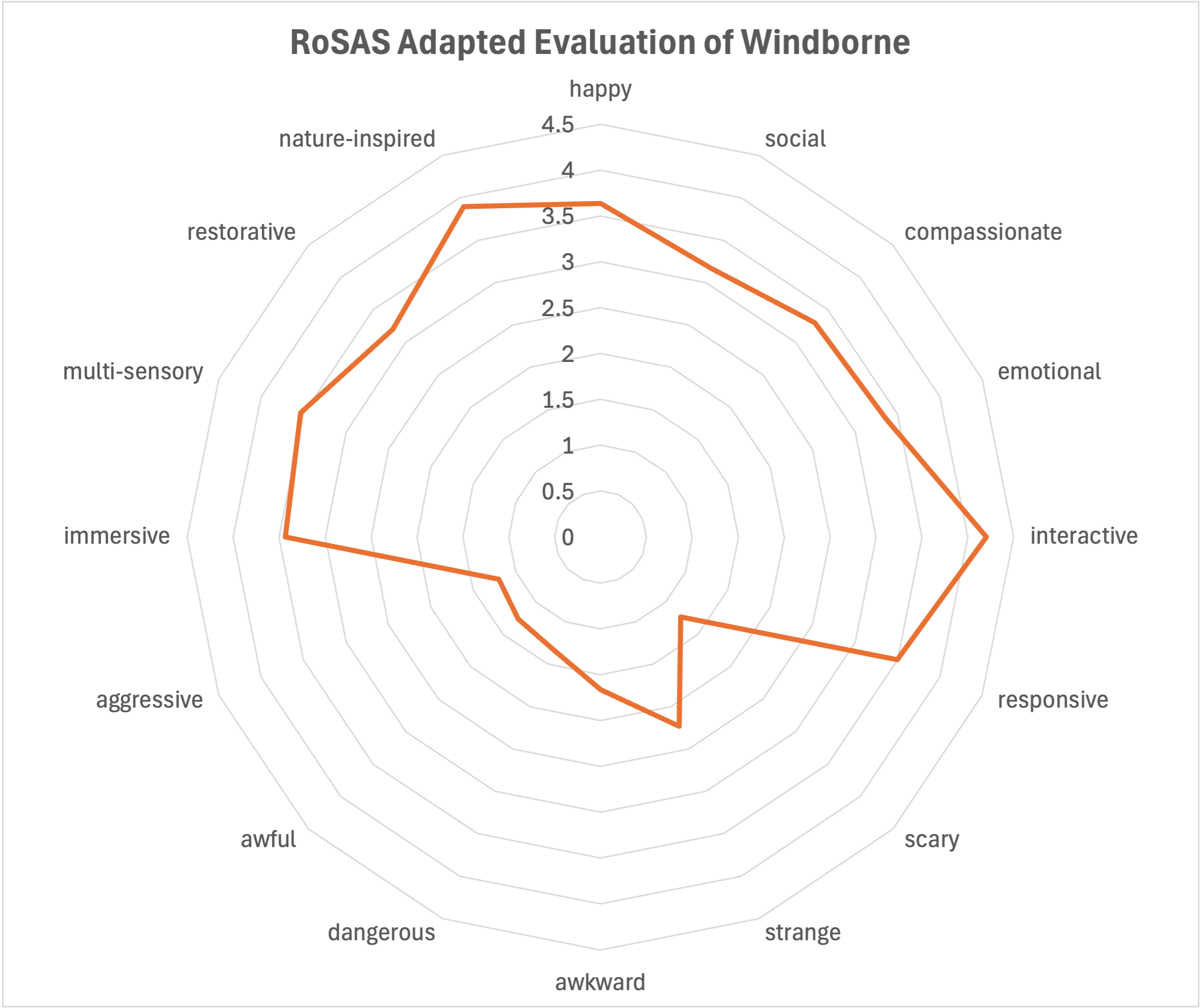
On an adapted RoSAS scale, participants rated Windborne highest as interactive, responsive, immersive, and nature-inspired, and low on negative traits such as scary, dangerous, and aggressive.

RoSAS adapted evaluation of Windborne

Safe & Responsible Innovation

Designed for Clinical Spaces

Publications & Recognition

Windborne: Fostering Nature Connection and Playfulness through Multimodal Interaction in Healthcare Settings

Borui Wang and Keith Evan Green.

doi:10.1145/3776574.3832531

ICMI '26: International Conference on Multimodal Interaction, Napoli, Italy (Demo)